
From reactive repairs on 50-year-old infrastructure to predictive operations that hold premiums flat and unlock over $400K per year in utility savings.
Preventing A $5M Claim At A Major Western Canadian Events Campus
From reactive repairs on 50-year-old infrastructure to predictive operations that hold premiums flat and unlock over $400K per year in utility savings.
Solution Provider: Novem | Customer: A major Western Canadian events and entertainment campus with multi-building, aging infrastructure | Location: Western Canada | Asset: Multi-building events and entertainment campus
BACKGROUND: Protecting An Iconic Campus With Aging Infrastructure
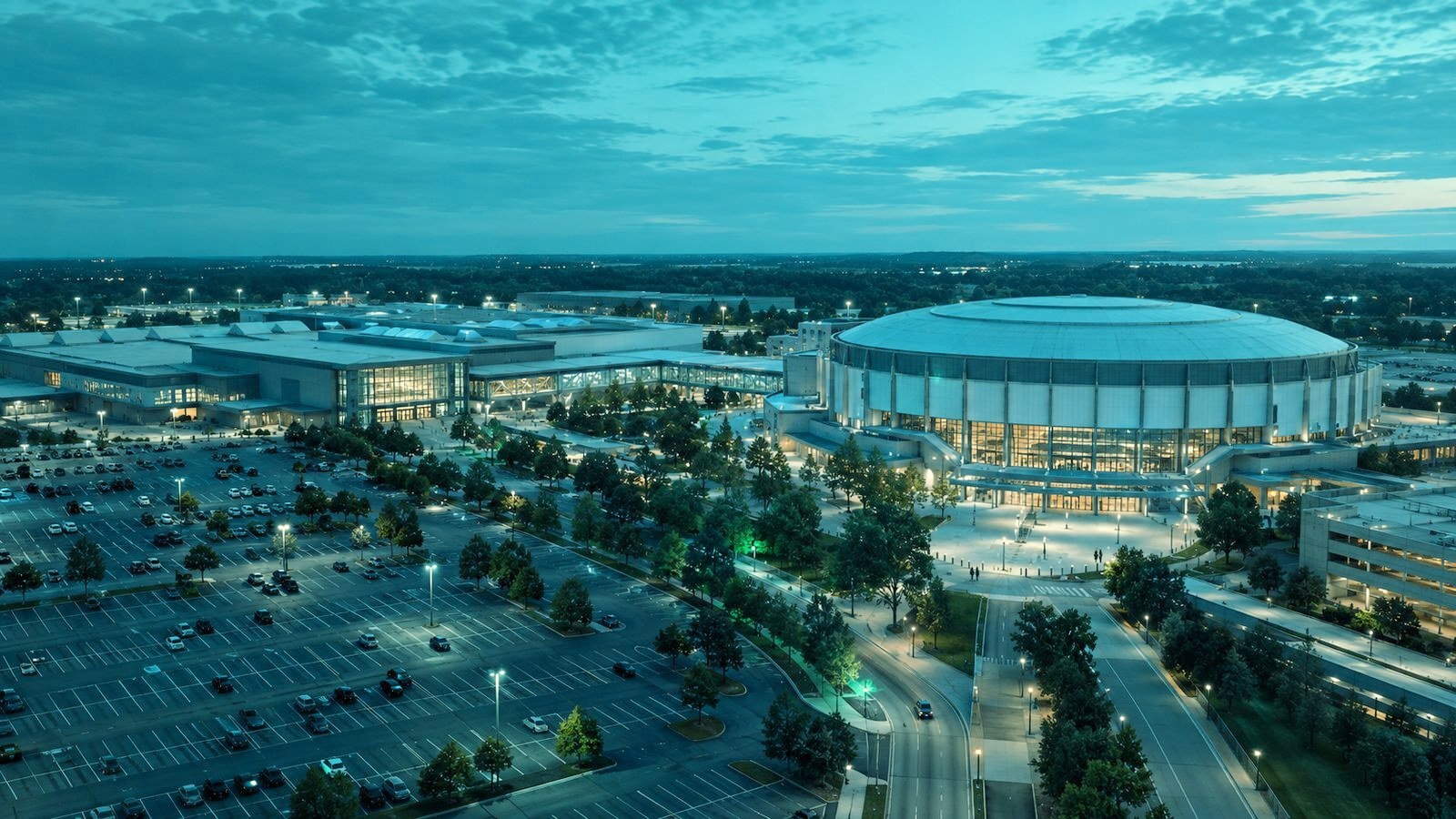
A major events and entertainment campus hosts millions of visitors each year across multiple buildings, outdoor spaces, and attractions. Many core buildings are more than 50 years old, with the newest completed in 1970.
The campus relied on manual inspections and reactive repairs. Traditional building automation systems followed a reactive operating model with limited ability to predict risk of failure in critical systems. Leadership faced a complex mix of aging equipment, deferred maintenance, and rising insurance and utility costs.
THE CHALLENGE: Can Old Infrastructure Become Predictive Without A Full Replacement
Leadership needed to answer three urgent questions:
- Can we reduce property and personal injury claims
- Can we reduce unscheduled downtime of critical infrastructure
- Can we control utility costs and leak losses
Wholesale infrastructure replacement was not financially realistic. But continuing to operate blind meant absorbing preventable losses, emergency repair premiums, and volatile property insurance costs. Leadership needed proof that existing systems still had useful life if they could make invisible risk visible.
THE SOLUTION: Layering A Digital Risk Platform On Existing Systems
The organization partnered with Novem to deploy a digital risk platform across its highest-value, highest-risk assets without ripping out existing systems.
Instrumenting Critical Systems
Novem and the campus team focused on:
- Vibration and condition monitoring on pumps and motors in the ice-making plant
- Water leak and flow detection at high-risk locations
- Natural gas leak detection via a seismic shut-off valve and associated monitoring
- Real-time decibel monitoring across outdoor event spaces
- Temperature, door, and motor status sensors on walk-in coolers
In parallel, the campus modernized lighting, replacing thousands of aging fixtures with high-efficiency programmable lights, reducing fire risk and cutting electrical use by approximately 30%.
Continuous Monitoring Of What Matters Most
The Novem platform continuously monitored the condition of critical mechanical systems, water flow, and sound levels across the campus. Maintenance staff received early warnings when equipment entered distress, allowing planned interventions during normal hours instead of emergency repair calls at premium rates.
Event managers gained access to real-time noise profiles so they could adjust sound levels during events instead of waiting for complaints. Integrated lightning detection improved public and staff safety during outdoor events.
Predictive Intelligence That Prevents Losses
The platform did more than monitor. It predicted failures. Vibration monitoring on a key motor in the ice-making plant identified early signs of failure and triggered a preventive maintenance intervention. That single event prevented a maximum probable loss estimated up to $5M in property damage, business interruption, and future premium impact.
A natural gas leak worth more than $400K per year was discovered and resolved after the installation of a seismic shut-off valve as part of the broader digital risk program. Underground water leaks were detected and mitigated, saving over 10,000 liters since baseline.
BY THE NUMBERS: The Impact
Key outcomes across the campus:
- Up to $5M maximum probable insurance claim prevented through predictive maintenance on ice-making equipment
- 0% annual increase in property insurance premiums despite broader market inflation
- Over $400K per year in natural gas losses identified and recovered
- More than 10,000 liters of water leaks detected and resolved
- Approximately 30% reduction in electrical use from lighting modernization, with a 4.5 year payback on the lighting project, excluding insurance benefits
WHAT THE NUMBERS MEAN
These results allowed the organization to shift funding from emergency repairs and unplanned losses into capital planning, visitor experience improvements, and staff support. Insurance partners saw measurable risk reduction, which strengthened underwriting confidence and created a foundation for future risk-adjusted pricing.
By treating insurance as a controllable cost, leadership demonstrated that aging infrastructure can achieve predictable Total Cost of Risk Ownership. Predictive operations also improved cash flow visibility, making long-term capital decisions easier to defend.
The campus is explicitly monetizing data. Sensor data on vibration, gas, water, sound, and energy now supports claim prevention, premium control, and ESG reporting, turning operational data into a financial asset that pays for itself through avoided losses and improved terms.
THE BREAKTHROUGH MOMENT: Discovering The Invisible $400K Leak
The installation of a seismic shut-off valve revealed a major natural gas leak that had gone undetected for years, valued at more than $400K per year.
In previous years, that leak would have continued indefinitely, hidden inside aggregate utility bills. Once monitoring exposed the anomaly, the organization could quantify, fix, and verify the improvement. That single discovery effectively paid for the system and validated the entire digital risk strategy.
THE TRANSFORMATION: Life Improves For Visitors, Staff, And The Community
For visitors: Upgraded lighting and real-time monitoring directly support public safety. Visitors benefit from better visibility, reduced fire risk, and assurance that the campus monitors weather and environmental conditions during outdoor events.
For staff and operations: Maintenance teams moved from constant firefighting to a more predictable workload. They can act on early warnings, schedule repairs during planned downtime, and rely on data rather than assumptions.
For the community and regulators: Real-time decibel monitoring transformed relationships with the local municipality by providing transparent data that showed many complaints were tied to external traffic rather than events. Insurance partners now see a campus that actively manages risk, not just carries coverage.
LOOKING FORWARD: Fully Digitizing The Campus
The campus plans to expand Novem’s digital risk platform across all buildings to further improve capital planning, insurance positioning, and long-term operating costs. As more systems are instrumented, leadership will have a single source of truth for risk and performance across the portfolio.
CONFIDENTIALITY AND NDA
This case study is anonymized to protect customer confidentiality. Under NDA, Novem can share full customer identity, underwriting evidence, and detailed financial and technical results with qualified insurers, lenders, and strategic partners.
ABOUT NOVEM
Novem is an artificial intelligence (AI)-powered Property Risk Platform for institutional real estate portfolios, built to confront invisible risk: the unmonitored systems that stay quiet until a preventable failure becomes a multi-million-dollar claim, years of insurance premium increases, and a board asking for evidence that was never assembled. We understand the responsibility of protecting people, capital, and confidence when that evidence is fragmented. Novem turns building, claims, and operational data into a defensible view of risk so Chief Financial Officers and asset owners can predict and prevent equipment failures, reduce Total Cost of Risk Ownership (TCRO) and insurance costs, protect net operating income (NOI), and support stronger asset valuations.
Get a live walkthrough of the Novem platform with your use case.