Automated Continuous Commissioning Unlocks $200K+ At A Specialized Dementia Care Facility
From manual commissioning to automated continuous commissioning that cuts wrap-up liability and delivers six-figure annual savings.
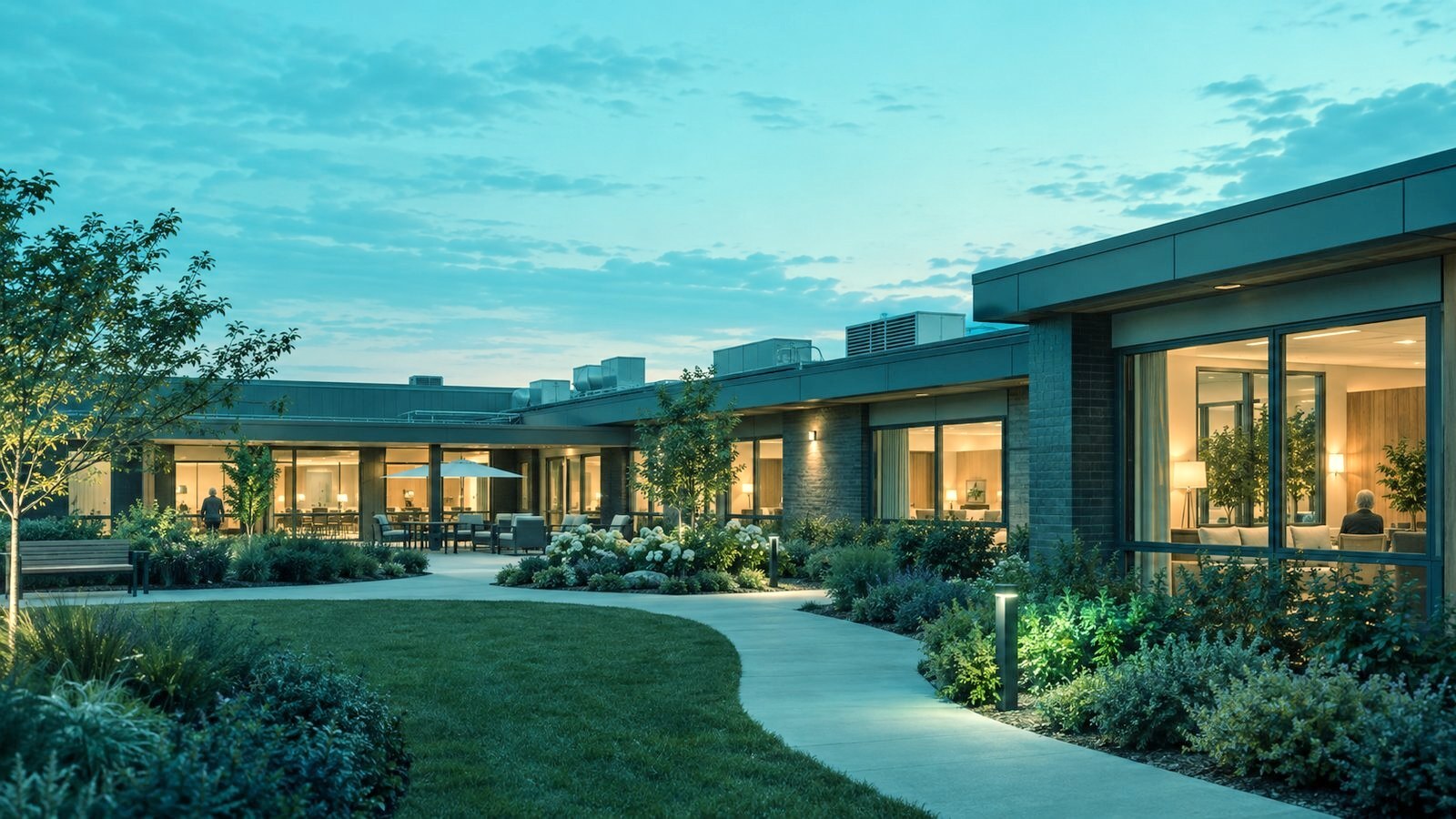
Solution Provider: Novem | Customer: A specialized dementia and long-term care facility in Western Canada | Location: Western Canada | Asset: 4-storey, purpose-built dementia and long-term care facility with underground parking
What does automated continuous commissioning deliver for a care facility? At a specialized dementia and long-term care facility in Western Canada, Novem's Automated Continuous Commissioning (ACC) on the Property Risk Platform found equipment that was not running as designed and fixed it before it became a claim. The facility saved $93K during handover, cutting wrap-up liability costs, and now saves $109,326 a year in operating costs.
- Commissioning became both a risk control and a financial lever.
- $93K saved at handover and $109,326 saved every year in operations.
- Residents get more stable temperatures and fewer disruptions.
BACKGROUND: High-Acuity Care Requires Reliable, Efficient Buildings
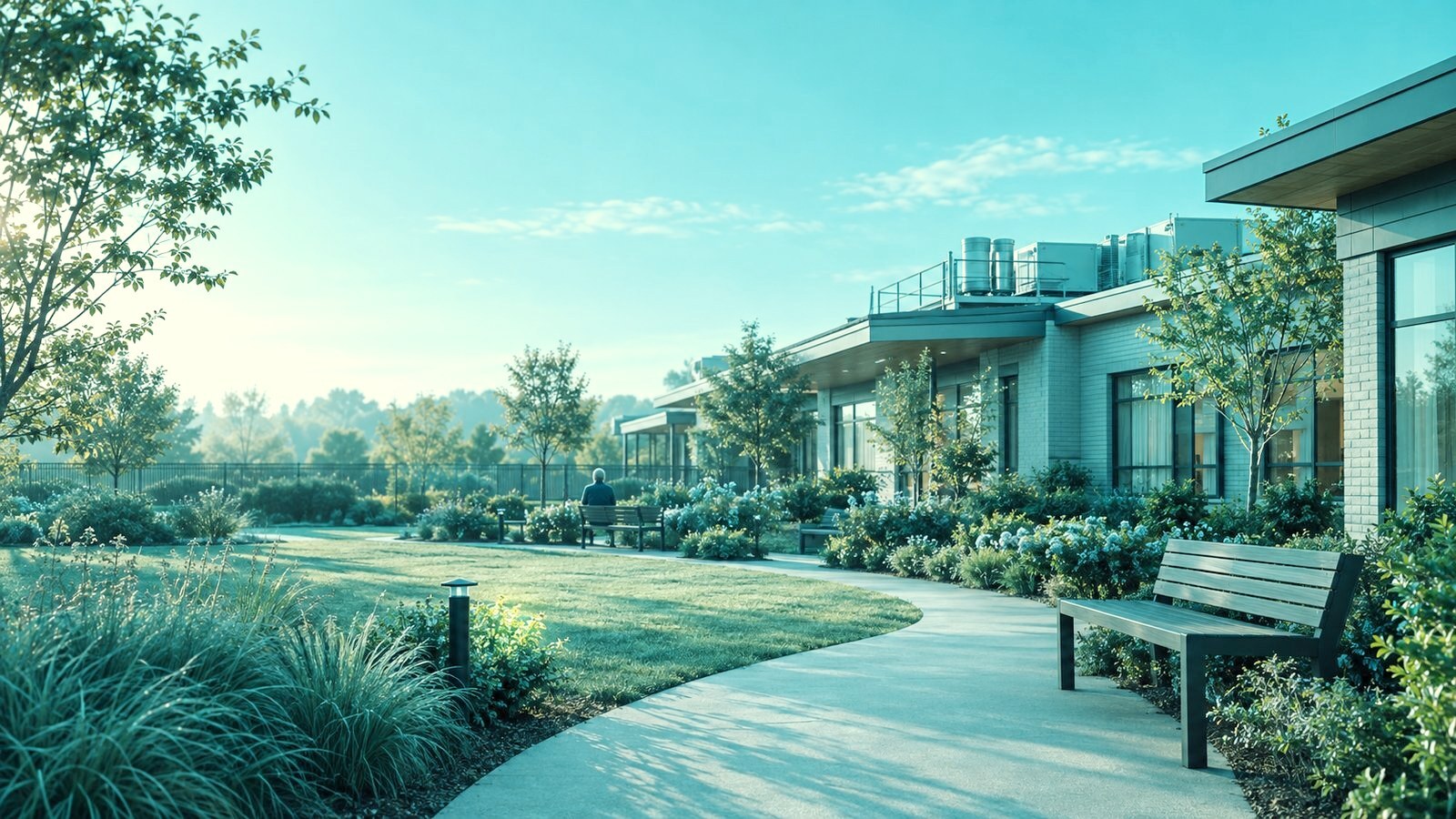
A specialized dementia and long-term care facility provides care for more than 200 residents in a 4-storey building above a large underground parkade. The completed construction cost was approximately $53M, with complex mechanical and electrical systems needed to support vulnerable residents.
Leadership needed to ensure the building performed as designed, both to protect residents and to prove financial performance to owners and insurers.
THE CHALLENGE: Traditional Commissioning Leaves Value On The Table
Standard commissioning practices often leave issues undetected until after handover, when they become more expensive to fix and harder to quantify. For this facility, any underperformance would affect comfort, energy use, and ultimately Total Cost of Risk Ownership.
Key risks included:
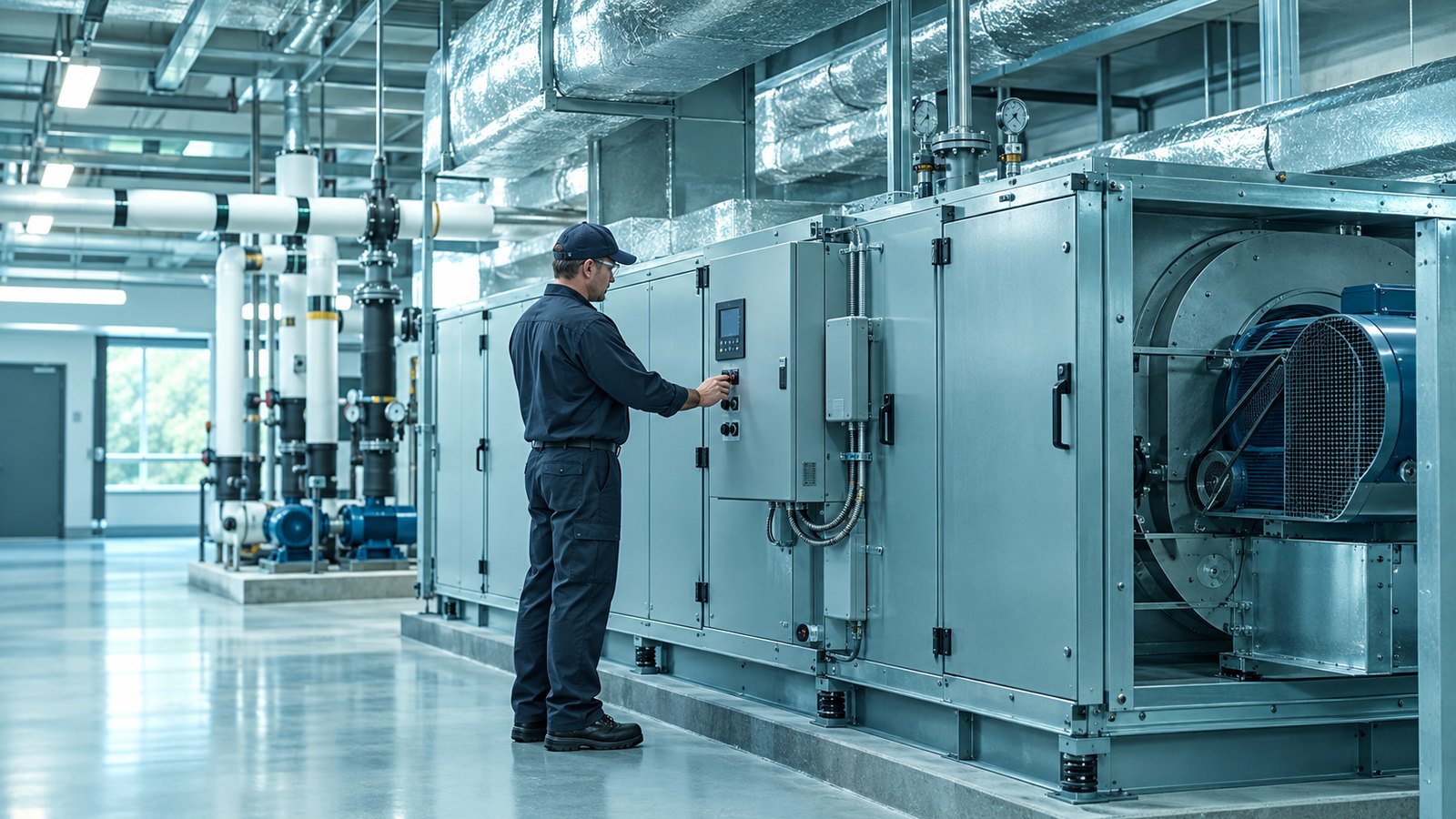
- Mechanical equipment not running as specified
- Air handling issues affecting pressurization and comfort
- Undetected control problems driving up energy use and wear
The owner needed a way to validate performance continuously, document issues for insurance and construction teams, and avoid paying for hidden inefficiencies.
THE SOLUTION: Automated Continuous Commissioning On The Property Risk Platform
Novem deployed its Automated Continuous Commissioning (ACC) solution, enabled by Novem’s Property Risk Platform, across key building systems.
Analytics On Air Handling And Pressurization
Analytics monitored fan drives in air handling units and flagged units that were not operational. Investigation revealed drives that had not been properly commissioned and could not run. Correcting these issues ensured proper pressurization and prevented cold air from infiltrating resident spaces.
ACC also identified rooftop units that were not responding correctly to heating calls. With digital forensics, contractors resolved the control issues, allowing equipment to function as intended.
Correcting these issues ensured proper pressurization and prevented cold air from infiltrating resident spaces.
Energy Waste And Filter Management
Analytics flagged air filter pressure drops indicating dirty filters. In response, technicians replaced filters before fans ran at higher speeds to compensate, reducing wasted energy and stress on equipment.
Heat Exchanger And Critical Equipment Monitoring
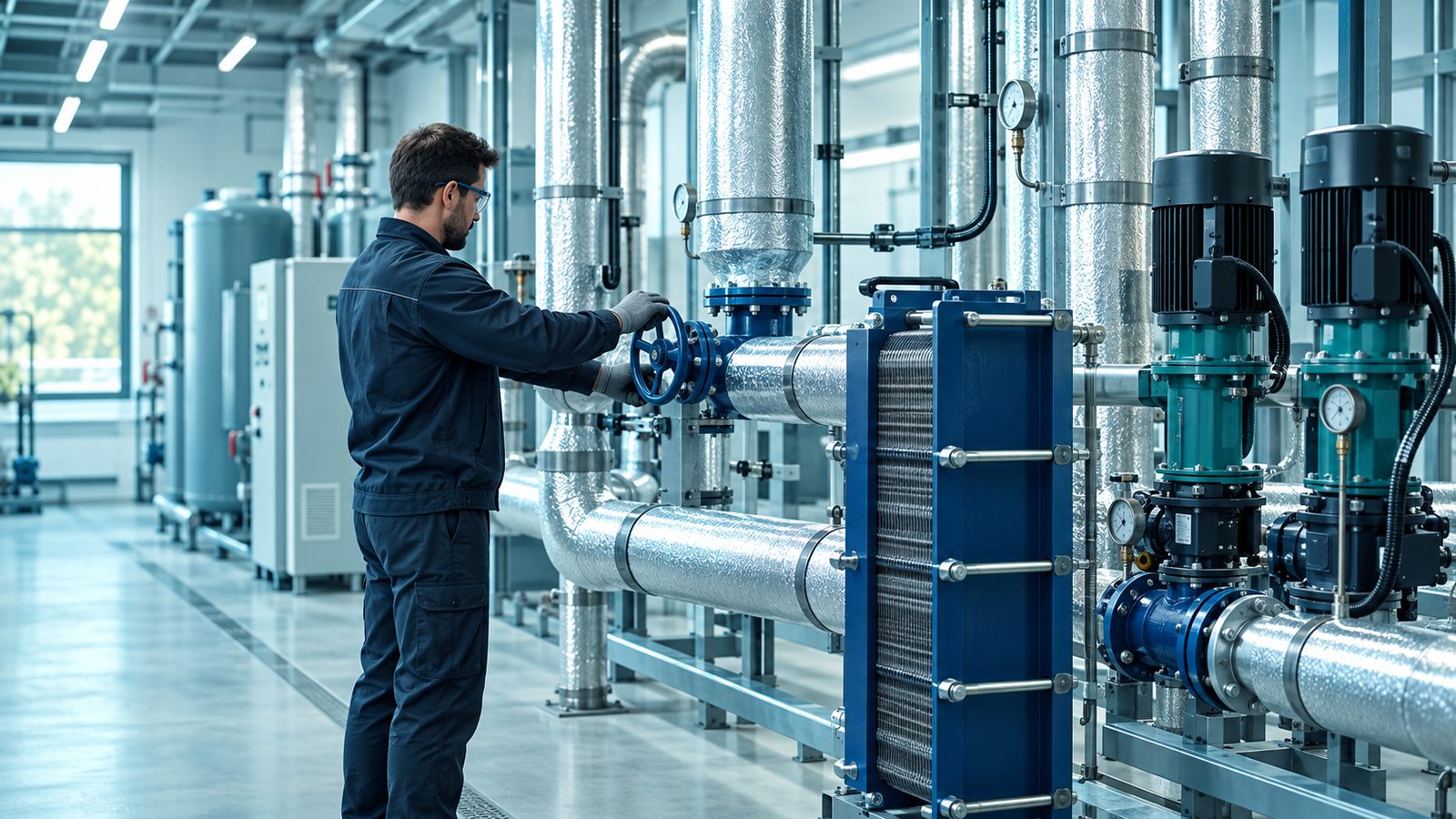
Heat exchanger analytics revealed supply temperatures below expected levels. Further investigation found manual isolation valves closed and circulation pumps overridden off at the local panel. Once corrected, heating performance returned to specifications.
Laundry dryer monitoring identified false run status signals and issues with lint traps and door switches. Continuous monitoring ensured this critical support equipment remained functional and compliant with vendor specifications.
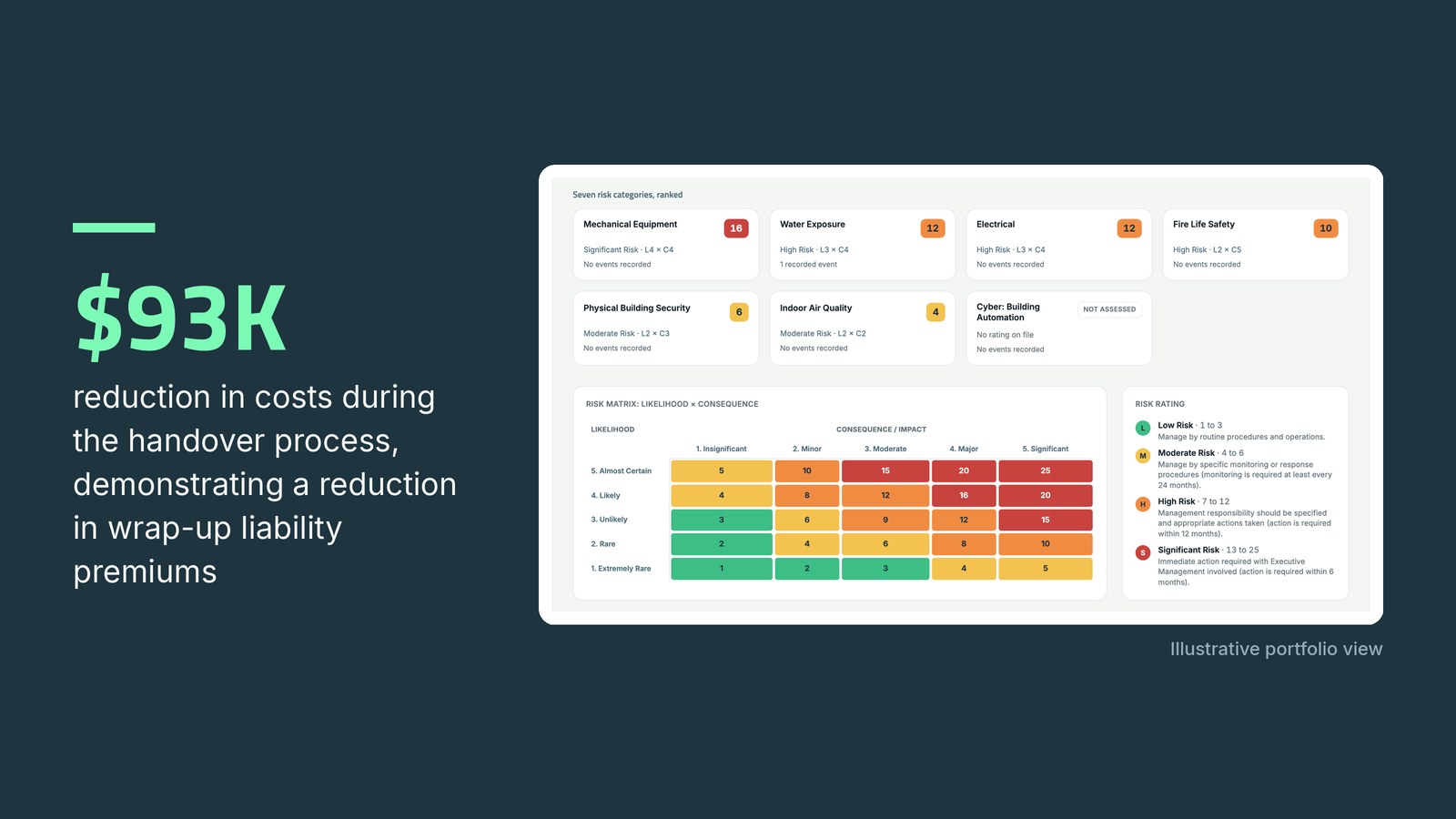
BY THE NUMBERS: The Impact
- $93K reduction in costs during the handover process, demonstrating a reduction in wrap-up liability premiums
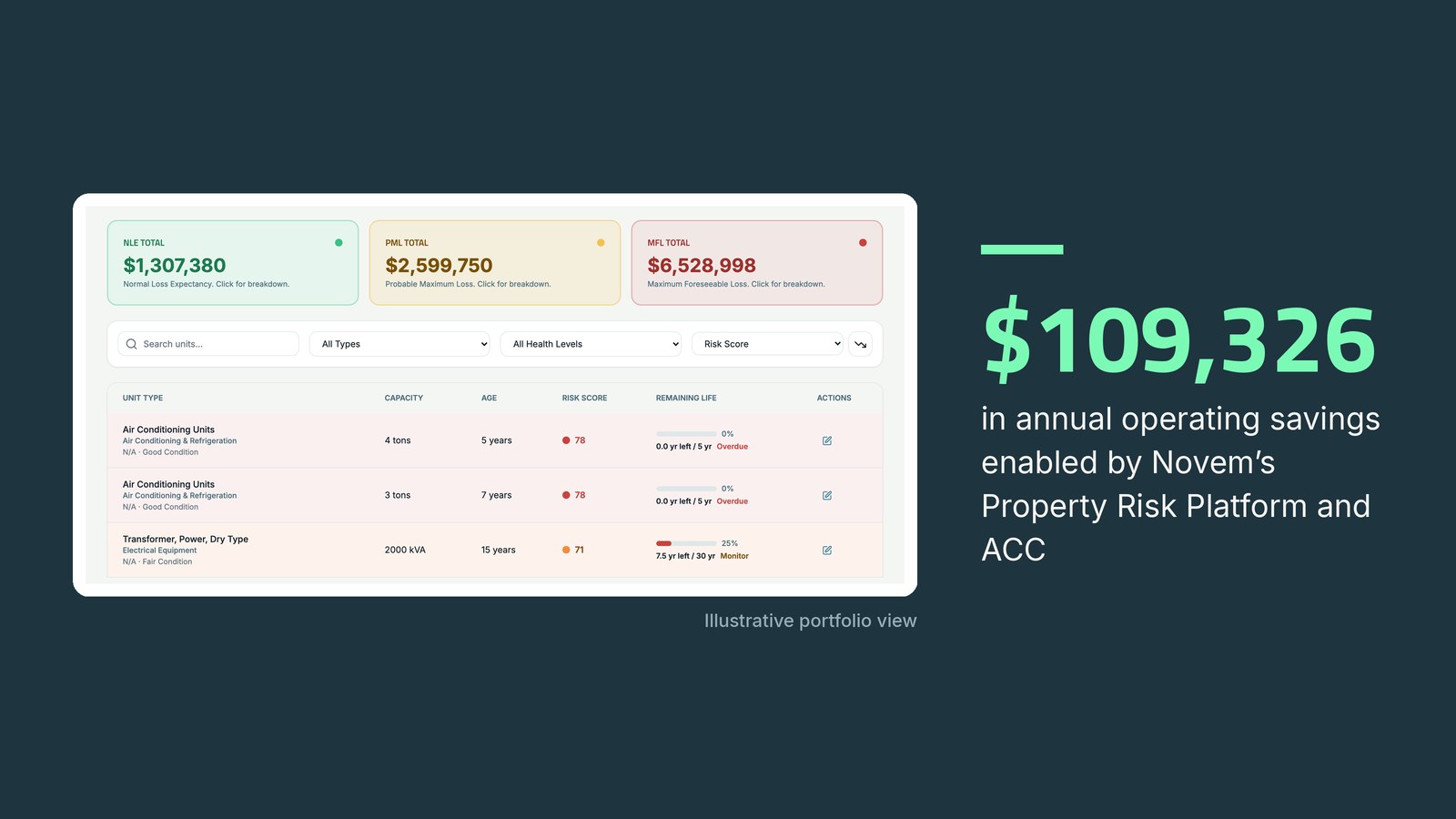
- $109,326 in annual operating savings enabled by Novem’s Property Risk Platform and ACC
WHAT THE NUMBERS MEAN
Implementing Automated Continuous Commissioning proved that commissioning can be both a risk control and a financial lever. The $93K handover saving reduced wrap-up liability costs and provided evidence that performance issues were detected and resolved before they turned into claims or chronic operating inefficiencies.
Leadership can now quantify how improved building performance supports both care quality and financial resilience.
Annual operating savings above $100K strengthen cash flow and support reinvestment in resident programs, staffing, and reserves. Leadership can now quantify how improved building performance supports both care quality and financial resilience.
In practice, the facility is monetizing data. Commissioning and performance data now translate directly into lower risk-related costs, reduced insurance exposure, and higher operating efficiency, turning what used to be a cost of doing business into a recurring financial return.
THE TRANSFORMATION: From Hidden Issues To Measured Performance
For owners and insurers: The facility now has data that validates performance for insurance, owners, and construction teams, demonstrating that risk is actively managed rather than assumed.
For operators and facilities teams: Staff rely on continuous analytics to catch issues early, schedule corrective work efficiently, and keep critical systems operating within specification.
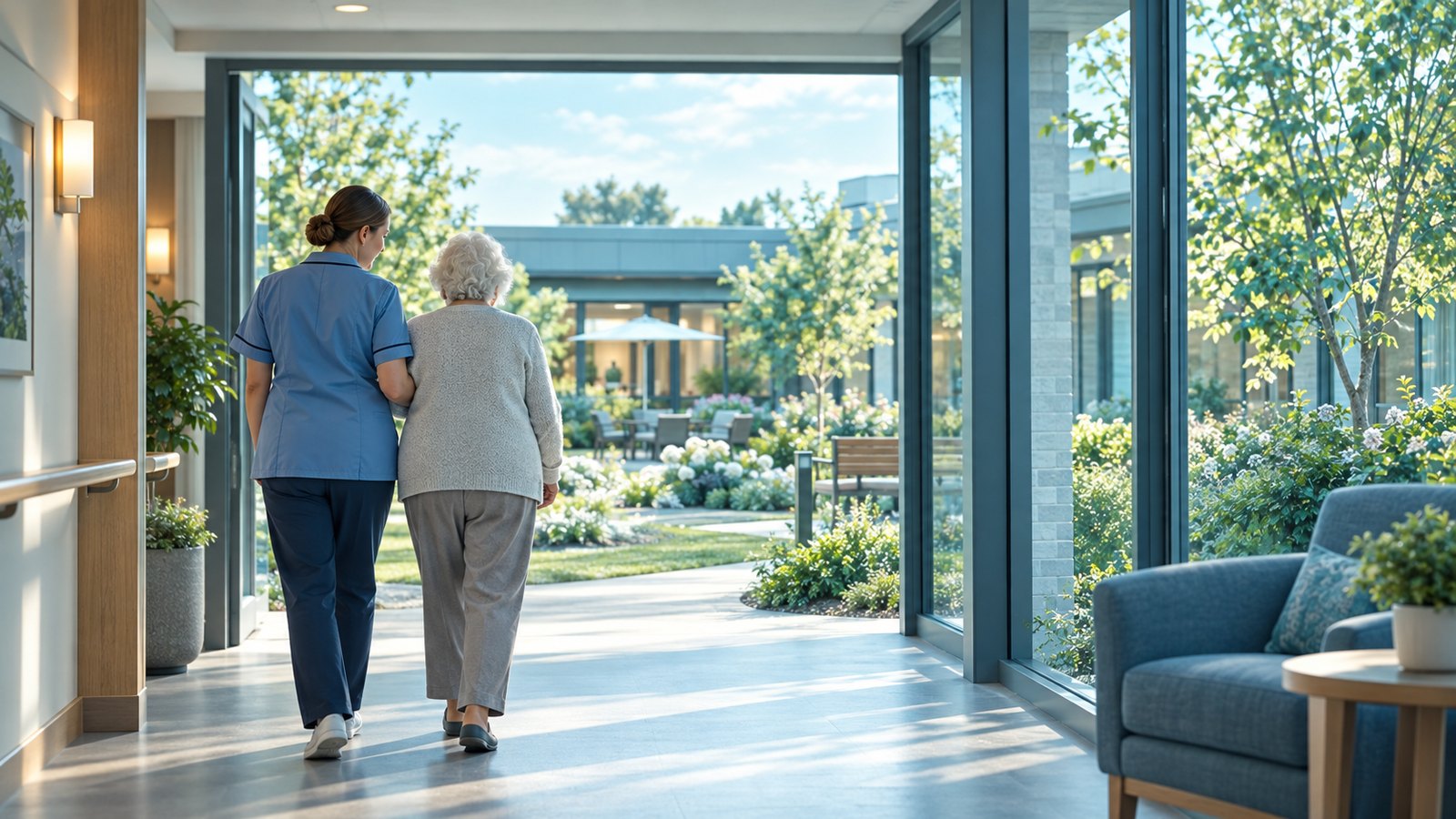
While they may never see the analytics directly, residents benefit from more stable temperatures, more reliable systems, and fewer disruptions, all in a facility that runs closer to its intended performance.
For residents and families: While they may never see the analytics directly, residents benefit from more stable temperatures, more reliable systems, and fewer disruptions, all in a facility that runs closer to its intended performance.
LOOKING FORWARD: Scaling ACC As Standard Practice
The success at this facility positions Automated Continuous Commissioning as a standard for future projects and retrofits in the operator’s portfolio. By treating commissioning as a continuous process rather than a one-time event, organizations can protect cash flow, reduce Total Cost of Risk Ownership, and provide better environments for high-acuity residents.
FREQUENTLY ASKED QUESTIONS
What is Automated Continuous Commissioning?
Automated Continuous Commissioning (ACC) uses analytics on the Property Risk Platform to check building systems against their design continuously, not once at handover. It flags equipment that is not running as specified so it can be fixed early.
What issues did ACC find at this facility?
It found air handling fan drives that had not been properly commissioned and could not run, rooftop units not responding to heating calls, dirty air filters, and closed isolation valves on a heat exchanger. It also caught false run signals and lint trap and door switch issues on laundry dryers.
How did ACC reduce insurance costs?
The $93K handover saving reduced wrap-up liability costs. It also gave evidence that performance issues were found and resolved before they turned into claims.
How do the savings help residents?
Annual operating savings above $100K support reinvestment in resident programs, staffing, and reserves. Residents benefit from more stable temperatures, more reliable systems, and fewer disruptions.
Will ACC be used on other projects?
The operator now positions ACC as a standard for future projects and retrofits in its portfolio.
CONFIDENTIALITY AND NDA
This case study is anonymized to protect customer confidentiality. Under NDA, Novem can share full customer identity, underwriting evidence, and detailed financial and technical results with qualified insurers, lenders, and strategic partners.
ABOUT NOVEM
Novem is a Property Risk Platform for institutional real estate portfolios, built to confront invisible risk: the unmonitored systems that stay quiet until a preventable failure becomes a multi-million-dollar claim, years of insurance premium increases, and a board asking for evidence that was never assembled. We understand the responsibility of protecting people, capital, and confidence when that evidence is fragmented. Novem turns building, claims, and operational data into a defensible view of risk so CFOs and asset owners can predict and prevent equipment failures, reduce Total Cost of Risk Ownership (TCRO) and insurance costs, protect net operating income (NOI), and support stronger asset valuations.