
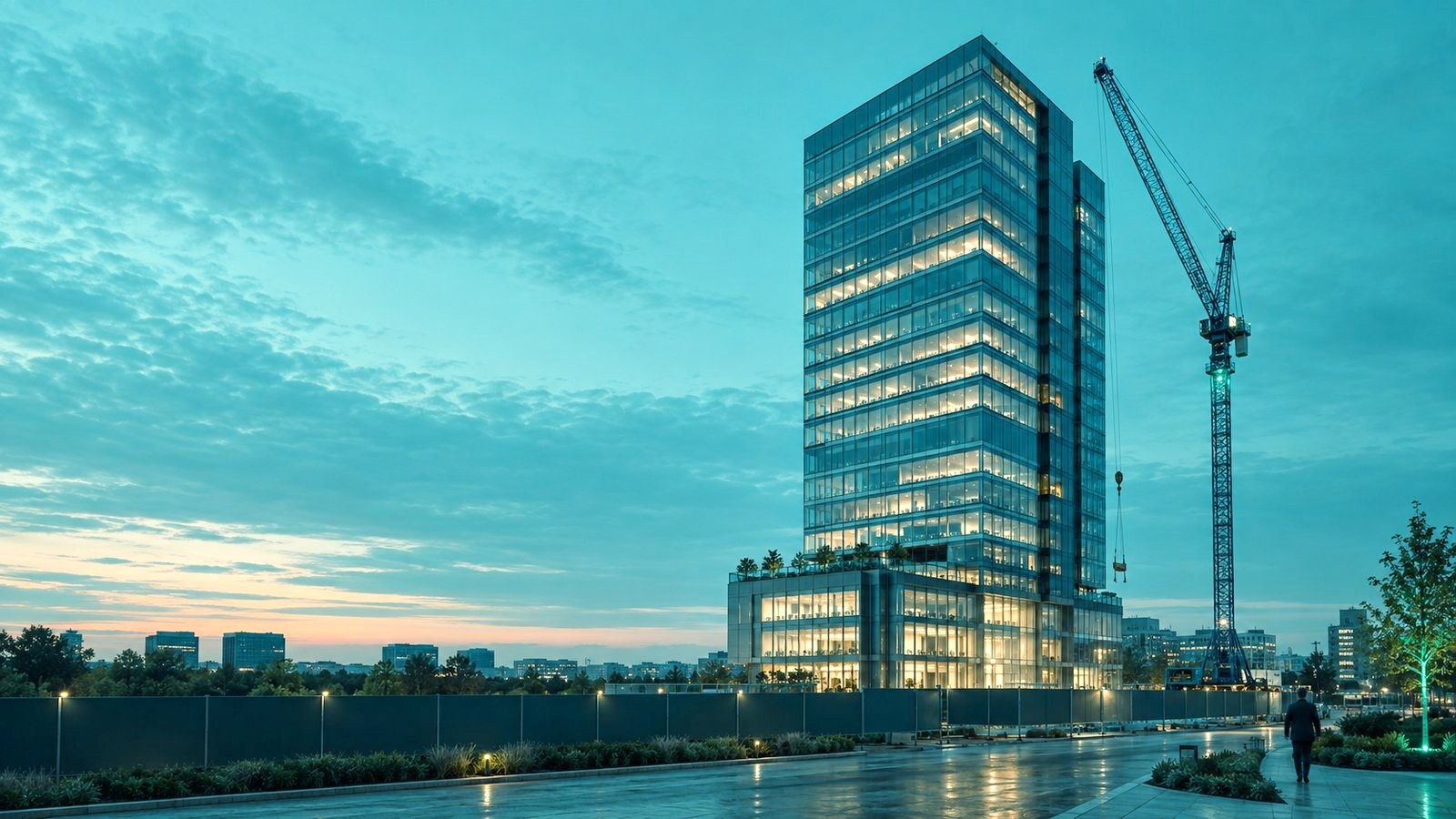
From 36 Months to 4 Months: Novem Helps Landmark Mixed-Use Office Tower Accelerate Building Systems Startup by Nearly 89%
Novem helps institutional real estate owners identify which building systems are likely to fail, what that failure could cost, and what to fix first to protect cash flow.
VANCOUVER, British Columbia, June 25, 2025: Novem helps institutional real estate owners make building failure predictable. The company combines live building data with historical loss data to identify early signs of equipment and system risk, so owners can reduce surprise failures, avoid emergency spend, and make better capital and insurance decisions. Today, Novem announced that its work at a landmark mixed-use office tower helped cut the building's systems startup and stabilization timeline from 36 months to 4 months.
Building systems startup is the process of testing, tuning, and verifying that a building's critical systems including HVAC, electrical, controls, and life safety are working properly before and after full operations begin. When that process drags on, owners can face delayed stabilization, extended carrying costs, tenant frustration, and hidden performance issues that become expensive later.
"For CFOs and asset owners, readiness matters because cash flow depends on reliable building performance. Compressing a startup and stabilization timeline from 36 months to 4 months changes the economics of the asset. It improves operational confidence and helps protect asset value."David Crawford, CFO and Head of Capital Planning, Novem
Novem is defining a new category in the market: a Property Risk Platform for institutional real estate and insurance. In plain terms, that means helping owners move from reactive building management to predictive operations. Instead of waiting for a system to fail, Novem gives leaders earlier visibility into what is at risk, what action matters most, and how to defend those decisions with audit-ready data.
Industry research has found that commissioning can deliver median whole-building energy savings of 13% in new construction and 16% in existing buildings, showing why faster and more effective building startup matters financially, not just operationally. Other industry estimates put delayed occupancy costs for commercial properties at $0.50 to $2.00 per square foot per month in lost revenue, which can quickly turn startup delays into a material cash flow issue.
For CFOs and asset owners, that matters because the financial burden of building risk goes well beyond one repair. It includes claims, downtime, emergency repair premiums, insurance volatility, wasted labor, and capital deployed too late. Novem refers to that broader burden as Total Cost of Risk Ownership (TCRO).
At this mixed-use office tower, Novem helped move the asset from fragmented testing and handover activity to a more continuous, structured, and financially visible process. That shortened the path to dependable building performance and reduced the period where system underperformance could put revenue readiness and asset value at risk.
"In institutional real estate, a long building startup cycle is not just an engineering issue. It is a financial issue. When a building takes years to stabilize, owners absorb delay, uncertainty, and avoidable cost. Novem helps make that risk visible early enough to act on it."Clint Undseth, CEO, Novem
The result strengthens Novem's position in mixed-use office, institutional commercial real estate, and complex urban developments where leaders need more confidence in capital timing, operational readiness, and the financial consequences of underperformance. It also reinforces the company's belief that risk should never be invisible because what owners cannot see often becomes what they end up paying for.
###
Notes to editors
Customer outcome data referenced in this release including the reduction in building systems startup timeline from 36 months to 4 months is Novem proprietary client data. External statistics are sourced as follows:
[1] Building commissioning energy savings benchmark (13% new construction / 16% existing buildings) Lawrence Berkeley National Laboratory, "Building Commissioning Costs and Savings Across Three Decades and 1,500 North American Buildings."
Source: https://eta-publications.lbl.gov/publications/building-commissioning-costs-and
[2] Delayed occupancy cost range ($0.50 to $2.00/sqft/month) PingCx, "The Hidden Costs of Manual Commissioning in Today's Complex Buildings" (May 2025).
Source: https://www.pingcx.com/blog/the-hidden-costs-of-manual-commissioning-in-todays-complex-buildings
About Novem
Novem is an artificial intelligence (AI)-powered Property Risk Platform that makes building failure predictable for institutional real estate portfolios. By combining real-time monitoring with normalized claims and equipment data, Novem turns invisible risk into audit-ready financial evidence. CFOs and asset owners use Novem to reduce Total Cost of Risk Ownership (TCRO) and insurance costs, protect net operating income (NOI), support stronger asset valuations, and enter board, lender, and insurer conversations prepared with facts. Novem is headquartered in Vancouver, Canada.
Media contact
Novem
pr@novemdigital.com
See how predictive operations could lower Total Cost of Risk Ownership (TCRO) across your portfolio before failure becomes a claim.